Jan 19th, 2026
So, I’ve now watched Avatar: Fire and Ash (2025) twice. The first time was right before the end of the year. Before diving into the new movie, I decided to refresh my memory by rewatching the previous two films. I subscribed to Disney+ and revisited Avatar (2009) and Avatar: The Way of Water (2022). Since then, I’ve ended up rewatching the entire series again, including a second viewing of Fire and Ash, this time in IMAX. Watching these films back-to-back reminded me just how great they really are: the character development, the story flow, the perfect casting, and of course, how well everything is written. Big appreciation to James Cameron, I love you, man! Honestly, I’m still living in Pandora.
After watching Fire and Ash, and honestly my first impression that it was great. As the title suggests, the movie brings “fire” element into its themes and introduces the Ash Na’vi clan into the story. It’s also very easy to follow, because it clearly continues from the same script and narrative thread as the previous films. While several new characters are introduced, I did feel that some of them simply passed by without giving the audience enough time to really get to know them. Still, I think the movie works really well overall. But, I did notice a loop: characters chasing the same goal, failing, and repeating the cycle. But then again… isn’t that true for most action movies?
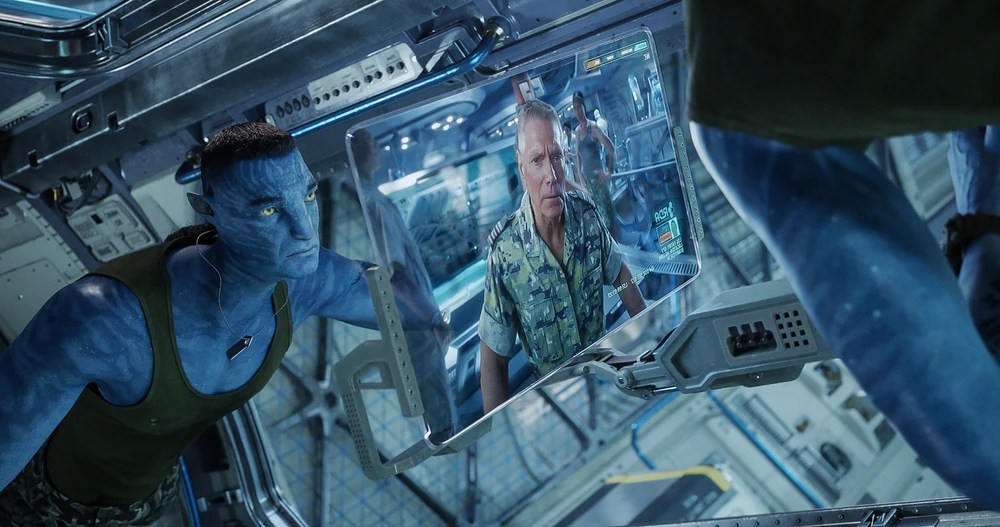
Like in many other films, I also find myself drawn to the villain. They’re usually the coolest part of the story. Honestly, I find Miles Quaritch, played by Stephen Lang, across all three Avatar movies fascinating. He’s badass, ruthless, and let’s not even start on the lines he delivers throughout the franchise, they’re cool. That said, there’s a common debate around his character: that he’s boring, underdeveloped, and just doing the same thing over and over again. I can’t completely dismiss that criticism. After reading some opinions and reflecting on the films, I kind of see their point.
Yet, I still can’t accept the idea that he isn’t one of the best villains, or even one of the best characters in the franchise. There’s a side of him that’s undeniably evil, intimidating, and difficult not to like as a bad guy. To me, he steals the stage every time he’s on screen. I know this is subjective, so I did what anyone would do: I surfed the internet to see what actually makes a great villain. That’s when I came across an article I now use shamelessly to validate my opinion—haha.
The article is called What Makes a Great Villain? Your Checklist for Writing a Good Bad Guy by Jerry Jenkins. It explains what makes a villain compelling, and I tried applying Jenkins’ checklist to Miles Quaritch to see if he truly deserves the title of a great villain.
Motivation: The Core of a Villain
According to Jenkins, motivation is the most important ingredient. Why does the villain do what he does? Why is he so cruel?
In the first Avatar movie, Miles Quaritch is the Head of Security at the RDA facility on Pandora. His job is straightforward: protect humans and execute military orders from the company funding the operation. Those orders include driving the Na’vi, Omaticaya clan, away from their homeland because it contains valuable resources the company needs. Unfortunately, that land is also home to the Spirit Tree, sacred to the Omaticaya clan and believed to connect them to Eywa and their ancestors.
From our perspective, this is undeniably evil. But from Quaritch’s point of view, he’s doing his duty. He even gives Jake Sully, the main character played by Sam Worthington, three months to negotiate with the Na’vi and persuade them to move peacefully. Quaritch isn’t immediately destructive, he tries diplomacy first, in his own way. The plan only fails because Sully becomes emotionally involved and ultimately betrays him.
Now, let’s look at this from Quaritch’s shoes. He takes Jake in, gives him a chance, and even promises him new legs in return for completing the mission. Jake agrees, then forgets about it. Betrayal is the turning point here. Anyone who’s been stabbed in the back knows how powerful that feeling of anger and rage can be. In fiction, that rage doesn’t fade quietly, it explodes. That’s where Quaritch’s obsession with Sully truly begins.
Even when the Spirit Tree is surrounded, Quaritch still gives the Na’vi a chance to leave before destroying it. He uses tear gas first, not missiles. To me, that moment shows there’s still some humanity left in him, buried under his anger and sense of betrayal.
The Loop Continues
In The Way of Water, Quaritch returns in a recombinant Na’vi body, implanted with his memories, but not the experience of his death. When he learns how he died, his hatred and desire for revenge only deepen. Add to that the revelation that his son, Spider, is being cared for by Sully, and the emotional stakes rise even higher.
Yes, this is where the loop becomes obvious: Quaritch chasing Sully becomes the central conflict again. Many viewers hoped that with his new body, Quaritch might finally understand Pandora: its beauty, balance, and interconnected life. But he doesn’t. And honestly, that failure makes sense. As Jenkins says, a great villain’s “maturation process is stunted and stalled.”
Jenkins’ Villain Checklist — Does Quaritch Pass?
If I try to apply Jenkins’ villain checklist to Miles Quaritch, I honestly think he fits almost every point. First of all, he is completely convinced that he is the good guy. In his mind, Jake Sully betrayed him, and Sully’s Na’vi resistance is responsible for the deaths of men and women who were simply following orders and trying to survive on Pandora. From that perspective, Quaritch’s actions feel justified to him. He also has many likeable qualities, damn right he does. He is strong, solid, clever, and charismatic, and he delivers some of the coolest lines in the entire franchise. Those qualities alone make it hard not to enjoy watching him.
He is also a worthy opponent who makes the hero look better. When you compare Quaritch and Sully, the contrast is clear: Sully is warm, family-oriented, and avoids violence whenever possible, while Quaritch is rough, aggressive, and deeply rooted in military discipline. This opposition strengthens both characters. Personally, I can say there is no scene where I dislike Quaritch being on screen. His presence always commands attention, sometimes annoying, sometimes terrifying but never boring. If this character were removed from the story, I honestly don’t think the Avatar movies would be nearly as compelling.
Quaritch is also clever and accomplished enough to earn begrudging respect. His team clearly respects him, and I think even Sully does, at least on some level. There’s a moment that really highlights this: when he chases Sully onto the balcony to shoot him and the researchers, he first warns his team to put on their masks. Then he kicks open the door and steps outside himself without wearing one. One of his men later follows him just to hand him his breathing mask. That scene shows how strong he is as a leader and how much respect his team has for him. He shouts for them to put their masks on first, and later one of them follows him outside just to give him his breathing mask. He is not a fool or a bumbler, even though he repeatedly fails in his pursuit of Sully. Maybe if I were in his place, I would have simply killed Sully the first chance I got, but his obsession and need for personal revenge keep getting in the way. What makes him interesting is that he shares many traits with the hero, but they are misdirected. He genuinely sees himself as a protector of humanity, which ironically turns him into the villain from the Na’vi’s perspective.
Another important point is that he is occasionally kind, and not just for show. We can see this clearly in Avatar: The Way of Water, when he is forced to choose between letting Spider die in the hand of Neytiri or releasing Kiri, characters portrayed by Jack Champion, Zoë Saldaña, and Sigourney Weaver. That moment reveals that he does care about Spider, even if he is afraid to show it. I believe exposing that emotional vulnerability would make him appear weak in front of his enemies, which is why he keeps it buried. At the same time, Quaritch can be absolutely merciless even to the innocent. I still remember the scene where he orders the killing of a pregnant Na’vi woman simply to extract information about Sully. Whether they lied or not, they had nothing to do with Sully directly, and that cruelty defines how far Quaritch is willing to go.
He is also deeply persuasive, especially in Avatar: Fire and Ash. The scene in the tent with Varang, played by Oona Chaplin,is a perfect example. On the surface, it looks like Quaritch is submitting to Varang’s control because of the substance she gives him. For general audiences, it might seem like they are forming an alliance. But if you look closely, especially after watching James Cameron’s Anatomy of the Scene explanation, you can see that Quaritch is actually manipulating the situation. He bargains, offers weapons and tools, and uses Varang and her people as a means to locate Sully. Quaritch is far too proud, selfish, and determined to truly submit. I strongly believe that he will eventually cross her if it benefits his goal.
As for jealousy, I’m not entirely sure, but I think it’s there. Sully has a family, a sense of belonging, and a life Quaritch no longer has. When Spider ultimately chooses Sully over him, that rejection feels personal and painful, and it likely fuels his resentment even more. And finally, there is no doubt that Quaritch is vengeful. His hatred toward Sully is the emotional engine driving his actions across all three films.
Final Thoughts
So yes, Miles Quaritch is a good bad guy. He’s ruthless, driven, manipulative, and emotionally damaged, yet still undeniably human. He gives the Avatar movies their edge, their tension, and their spice. Whether we like it or not, he is the shadow that keeps the story moving. And honestly, if the narrative ever shifted to a scenario where humans had to face something like the Xenomorph, Quaritch would be a badass commander to have on their side.
That said, looking ahead to Avatar 4 (if and when it happens) I do hope his character evolves. Will his story continue, or will it finally end? In Fire and Ash, we see him fall into an ocean of flame, but we never see his body. That alone makes me think he’ll be back, not because I’m rooting for him, but because it feels obvious. It’s possible he somehow survived the flame, or that Varang helped him. Even if he is technically dead, the RDA still has his data. They could simply create another avatar body and upload his memories again.
There’s also a small detail that caught my attention: the “PROJPHNX” (phoenix) logo on Quaritch’s vest in the second and third movies. A phoenix symbolizes rebirth, rising again from ashes, and that symbolism feels a little too on the nose to be accidental. It makes me think his character is meant to return, again and again, in some form.
By the end, Quaritch seems fully grounded in his mission, but what does that actually mean for him? Will he eventually switch sides? Abandon his new “missy” puppet? Or will he become even more consumed by revenge?
If the same revenge loop continues, it risks becoming stale. I’d love to see him either let go of his obsession, build a deeper connection with Spider, or more boldly, cross over to the other side and able to see the world ”through his new eyes”. The movie is great, honestly, the entire series is awesome. So awesome, in fact, that it made me spend more money just to see it again… and again in the cinema. Anyway, these are just my wandering thoughts on Avatar and Miles Quaritch. That being said, if you disagree, that’s completely fine. In the end, every mind sees stories differently.
 Wandering Monologues